“‘For I know the plans I have for you, declares the Lord, plans for wholeness and not for evil, to give you a future and a hope’” (Jeremiah 29:11, ESV).
[The Introduction to my forthcoming book, to be published online, follows.]
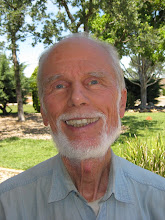
Many books have been written about demon affliction, but my Confessions of a Demonized Christian is unusual in that it is a frank, first person account of the sin and folly that led to my occupation and affliction by demons while I was already a Christian. Although my Confessions do not rise to the level of Augustine’s Confessions, neither do they descend to the level of the Confessions of Jean Jacques Rousseau, who, it is said, tried to justify himself by admitting the bad things he had done. My purpose in writing my book as a confession is, first, to help similarly afflicted Christians recognize that they have suffered demonic incursion. Then, by telling the story of how—by God’s grace—I overcame my demons, I want to help demonized Christians overcome theirs. Finally, I want to help others avoid such demon incursion. Therefore, I believe that my Confessions are more akin to Augustine’s than to Rousseau’s because I share with Augustine the goals of the edification of the church and the glory of God.
I think my 38-year track record as a Christian writer shows my seriousness of purpose and the absence of sensationalism in my writing. And all my Christian writing was done after having been demonized in 1970. My first major Christian publication was my exposé in Christianity Today (December 21, 1973) of Maharishi Mahesh Yogi’s deceptive presentation of Transcendental Meditation (TM) as non-religious in order to insinuate it into public schools in the United States. That was followed by InterVarsity Press’s booklet on TM (1974) and by TM Wants You! (Baker Book House, 1976), a book on TM co-authored with Vail Hamilton (Carruth), a former teacher of TM.
I prepared for these publications by interviewing people involved in TM, often sharing the gospel with them. While maintaining respect for the humanity of TM’s practitioners, I was able to calmly expose the deceptive presentation of Hindu-based TM as non-religious, reveal the anti-biblical character of Eastern spirituality and warn against the dangers of demonic incursion from its practice.
My academic degrees include a BS in Engineering from UC Berkeley and an interdisciplinary MA in Politics and Literature from a small liberal arts university in Texas. With this background, I have published articles on subjects ranging from quantum mechanics (Touchstone, April 2004) to the rescue of Jews in Le Chambon, France. In addition, I have critiqued some of the Harry Potter books for American Spectator Online, and I am working on a literary appreciation/critique of Jack London’s “To Build a Fire.”
The New Testament term “demonize” (daimonízomai) denotes being under the power of a demon or demons. I suffered demonization as a pervasive occupation of my body and a devastating affliction of my soul by demons, in which they subjected me to agonies of fear and anxiety and various physical afflictions. They never succeeded in suppressing my mind and gaining complete control of my body, but I did have one Hell of a fight because my body was already thoroughly occupied by evil spirits before I recognized them as demons. Nevertheless, despite their determined efforts, God’s grace was sufficient. What I learned through my experience in using the Scriptures and other means of grace against them, however, will be helpful to any demonized Christian, whatever degree of control the demons may have gained.
I received these demons at first gradually and imperceptibly through habitual sexual sin and later rapidly and palpably through false mystical experience. But there are many other avenues to demonization of believers because sins such as anger, unforgiveness, witchcraft, occultism, and recreational use of drugs have the same temporal consequences for Christians as for pagans: demonization. This, to-some, unpalatable reality has been recognized by a growing number of Christian scholars and leaders including Dr. Neil T. Anderson, Dr. Keith M. Bailey, Dr. Mark I. Bubeck, Dr. C. Fred Dickason, Dr. Ed Murphy and the late Dr. Merrill F. Unger. I share their view of this controverted subject not only from my experience, but also on the basis of the Scriptures. (See Chapter 22.)
To show exactly how demons entered my life requires that I expose the sins of other family members now dead, something that filial piety would forbid were it not for the importance of this material in making readers understand 1) How the devil operates in families and 2) How our sins can harm others in our families.
The form and purpose of my Confessions also require me to reveal my sins that opened me up to demonic incursion, including details of my sex life. This is embarrassing and humbling, and I would not do it were it not necessary to make clear just how sexual sin makes us vulnerable to entry by demons. I don’t dwell on these sins more than necessary for this purpose, but this may be a problem for readers for whom the “M-word” is a taboo. Indeed, one pastor suggested to me that perhaps the reason none of the publishers I contacted was interested in my manuscript was my frank discussion of masturbation (as sin). If that is true, perhaps the reason that alarming numbers of Christian men and pastors are said to remain addicted to pornography is that they are unwilling to confess their sin of lust under the humiliating name of the activity for the enhancement of which they pay good money to pornographers. Perhaps they are not desperate enough to admit just what they use their pornography for. Another reason may be that they have not recognized and dealt with the demonic element of their addiction.
Thus, this book will be helpful to those addicted to pornography as well as to those otherwise demonized because habitual sexual sin gives place to the devil just as much as do anger, unforgiveness, occultism and drug use. Since overcoming any of these sinful habits will likely require dealing directly with the demons involved, recognition of their presence may be the missing link necessary for victory over these sins
And there is certainly hope in Christ for all such habitual sinners and addicts, just as there is for other demonized Christians. So this book is addressed to all Christians afflicted by the devil and to those called to minister to them. For the cautionary yet hopeful story of how I became demonized and then, through the Scriptures and other means of grace, was restored to effective service in Christ’s kingdom, read the book.
David Haddon, August 19, 2011, Redding, California
Wednesday, August 24, 2011


Saturday, June 11, 2011
Reminiscences on the Life of My Brother: Earl's Last Hunt
My oldest brother Earl's 83rd birthday is today, June 11. Since both our birthdays are in June, and he was 10 years, 18 days my senior, I never forgot it as I sometimes did my other brothers’ birthdays. I had planned to mail him a home-made birthday card produced on my MS Publisher program with a hand-written message and a complimentary close of the one word, “Love.” Unfortunately, I was too late because he died suddenly last Sunday, June 5. Take heed.
He willed to me, among other things, his Winchester Model 94, .30-.30 carbine with which I killed my first deer on Red Mountain, East Fork, Trinity River, Trinity County, in 1956. I just realized that I had returned the favor by loaning him my Model 99 Winchester .308 with which he killed his last deer, probably sometime in the 1960s. After that exhausting hunt, he said he realized, "I don't have to do this." He came to prefer to see the beauty of the living animals and rather disapproved my continued willingness to hunt and kill them. Aesthetically, I agree with him, but like biblical Isaac I still have a yen for venison. I last hunted in 2009 and we didn't even see a buck--until we drove back through French Gulch where they hang around on the lawns even (or especially?) in the middle of deer season.
Henry David Thoreau had a similar development. While at Walden Pond he liked to catch and eat the pike. Later, he gave up such fare, but he admitted that if he returned to live on the Pond, he would be sorely tempted by those tasty fish. As a Transcendentalist (Pantheist) like Emerson, he probably had spiritual reasons for renouncing the killing of animals. As a Christian, I am free to take and eat meat, whether that of wild game or of livestock. Since the forgiveness of sins, my very salvation is based on the shedding of the innocent blood of the Lamb of God, Jesus Christ, I realize that in some circumstances, the shedding of blood is required for life to be preserved.
Thoreau thought that boys and young men should be allowed to pursue wild game because it brought them out into nature. But he viewed it as a stage through which they perhaps had to pass on the way to maturity. For myself, I'm not dogmatic, but I think those like my brother who renounce the chase have the better part. And perhaps those like my young Christian friend Brian, who never wanted to start hunting have the best of it.
Still, for some hunters, there is another aspect of hunting, the hunter's bond of trust formed over years of hunting together. You always put your life in the hands of your hunting partners and these relationships can become very close. Killing game becomes secondary to the ritual of the hunt, love for the wilderness in which you hunt and the relationships nurtured by the hunt.
Moreover, in gutting and skinning a deer, with blood at least up to your elbows, you get some sense of the reality of what happened to Christ on the Cross when he shed his blood for the sins of the world. And without the shedding of that blood, we all would be lost.
He willed to me, among other things, his Winchester Model 94, .30-.30 carbine with which I killed my first deer on Red Mountain, East Fork, Trinity River, Trinity County, in 1956. I just realized that I had returned the favor by loaning him my Model 99 Winchester .308 with which he killed his last deer, probably sometime in the 1960s. After that exhausting hunt, he said he realized, "I don't have to do this." He came to prefer to see the beauty of the living animals and rather disapproved my continued willingness to hunt and kill them. Aesthetically, I agree with him, but like biblical Isaac I still have a yen for venison. I last hunted in 2009 and we didn't even see a buck--until we drove back through French Gulch where they hang around on the lawns even (or especially?) in the middle of deer season.
Henry David Thoreau had a similar development. While at Walden Pond he liked to catch and eat the pike. Later, he gave up such fare, but he admitted that if he returned to live on the Pond, he would be sorely tempted by those tasty fish. As a Transcendentalist (Pantheist) like Emerson, he probably had spiritual reasons for renouncing the killing of animals. As a Christian, I am free to take and eat meat, whether that of wild game or of livestock. Since the forgiveness of sins, my very salvation is based on the shedding of the innocent blood of the Lamb of God, Jesus Christ, I realize that in some circumstances, the shedding of blood is required for life to be preserved.
Thoreau thought that boys and young men should be allowed to pursue wild game because it brought them out into nature. But he viewed it as a stage through which they perhaps had to pass on the way to maturity. For myself, I'm not dogmatic, but I think those like my brother who renounce the chase have the better part. And perhaps those like my young Christian friend Brian, who never wanted to start hunting have the best of it.
Still, for some hunters, there is another aspect of hunting, the hunter's bond of trust formed over years of hunting together. You always put your life in the hands of your hunting partners and these relationships can become very close. Killing game becomes secondary to the ritual of the hunt, love for the wilderness in which you hunt and the relationships nurtured by the hunt.
Moreover, in gutting and skinning a deer, with blood at least up to your elbows, you get some sense of the reality of what happened to Christ on the Cross when he shed his blood for the sins of the world. And without the shedding of that blood, we all would be lost.
Wednesday, May 18, 2011
A Tale of Two Cities: New York and Paris
So French Eurocrat Dominique Strauss-Kahn, key official of the International Monetary Fund, stands accused of attempting to rape an African-immigrant housemaid at a luxury hotel in New York. And the left-wing in France is outraged according to this report on National Review Online: "In French press accounts, one distills a veritable caricature: 'How dare those backward Americans do this? Do they have any idea of who Strauss-Kahn is and what he represents, or how we civilized and sophisticated Europeans deal with these dime-a-dozen sort of low-rent sexual accusations against men of culture from mere chambermaids?'”
According to an international report in the Record Searchlight, Strauss-Kahn was widely expected to run for the presidency of the French Republic despite reports of his affair with a subordinate. Indeed, his reputation as a womanizer had given him the nickname, "the great seducer."
But what I find interesting about Dominique Strauss-Kahn's alleged sexual assault on the African housemaid in New York is its parallel with a key incident in Dickens's Tale of Two Cities. The sin that motivates the unjust accusation against Charles Darnay (Evremonde) in Dickens's story was the rape of a young peasant woman by his long-dead father, the French noble, Count Evremonde. It seems that the French elite have yet to learn the lesson that Dickens took from the French Revolution, that if you oppress the masses of ordinary people without limit and/or treat them with utter contempt, sooner or later your class (or you) will pay the price.
La plus ca change, la plus c'est la meme chose. N'est ce pas?
According to an international report in the Record Searchlight, Strauss-Kahn was widely expected to run for the presidency of the French Republic despite reports of his affair with a subordinate. Indeed, his reputation as a womanizer had given him the nickname, "the great seducer."
But what I find interesting about Dominique Strauss-Kahn's alleged sexual assault on the African housemaid in New York is its parallel with a key incident in Dickens's Tale of Two Cities. The sin that motivates the unjust accusation against Charles Darnay (Evremonde) in Dickens's story was the rape of a young peasant woman by his long-dead father, the French noble, Count Evremonde. It seems that the French elite have yet to learn the lesson that Dickens took from the French Revolution, that if you oppress the masses of ordinary people without limit and/or treat them with utter contempt, sooner or later your class (or you) will pay the price.
La plus ca change, la plus c'est la meme chose. N'est ce pas?
Wednesday, May 11, 2011
Mea Culpa! Mea Culpa! Mea Maxima Culpa!
Yesterday I was on the Shasta College campus here in Redding sharing the gospel with students to whom I hand out leaflets raising questions about Jesus Christ. It's easy because many of the students who pause to take a look at the leaflet are willing to volunteer their opinion of who Jesus is in response to my inquiry. By asking questions and listening first, I find that many students are willing to listen to what the New Testament says about sin, salvation and the Savior. And about every other time I go out there, at least one of the students has been prepared by the Holy Spirit to confess Jesus as Lord.
That didn't happen yesterday, but a couple of young men were willing to read from the Scriptures what the Bible says about Jesus and our salvation and let me pray for them. After several hours of leafleting and sharing, I went upstairs to a room off the balcony above the cafeteria where InterVarsity Christian Fellowship (IV) was having a Bible study. We started small but soon an alumnus of Pelican Bay State Prison showed up with his guitar. The IV group leader seemed to identify with the visitor and mentioned that he was a former drug addict and a graduate of the Redding Mission's recovery program. A couple of black brothers came in and I found myself sitting beside a lovely young woman from Bethel's school of ministry who was from Romania and was reading the scripture from a bilingual Romanian-English Bible.
The Bible study was from Matthew 12, a chapter in which the Pharisees criticized Jesus disciples and Jesus himself, calling them Sabbath breakers because Jesus' disciples plucked some stalks of grain and ate the still tender grains and because Jesus insisted on healing the man in the synagogue with a withered hand on the Sabbath Day. Jesus defended his followers and himself summing up his argument by saying, "If you had known what these words mean, 'I desire mercy, not sacrifice' (Hosea 6:6), you would not have condemned the innocent" (Matt. 12:7).
The main point of the study seemed to me to be that God was more interested in our heart attitude towards him and towards our neighbors than in ritual obedience.
After discussing the Scripture, we joined in worship songs with help from the visiting guitarist and the young woman from Romania and prayed for one another. I went out to my table on the quad in front of the cafeteria to eat my lunch and distribute a few more leaflets. Almost immediately, I was tested on the study: Would I put mercy ahead of ministry?
A lovely young woman approached and since I didn't immediately recognize her, she reminded me of her name (say, Natalie) and that we had discussed the teachings of the Jehovah's Witnesses with whom she has been studying. I instantly remembered her and began my apologetic demonstrating that Jehovah's Witnesses are polytheists. Their calling Jehovah "Almighty God" and Jesus "mighty god" (Isaiah 9:6) and "a god" (John 1:1, New World Translation only) leaves them with not one God, but two, a high God and a lesser god. This is rather like the situation of Greek mythology with Zeus as the high god and other lesser gods like Hermes. The Witnesses limit their god count to two, but they are, nevertheless, polytheists, not true monotheists.
But providentially, Natalie was interested in bigger game. She innocently asked me why we believe in the Trinity. Now I was ready to lead her to biblical answers to that question, but our guitarist, my brother from Pelican Bay, appeared and offered to help us out. I was none too pleased with his interruption of an ongoing witness I have been working on for a while, but he had a Scripture and Natalie wanted to see it. When I saw that he was taking us to 1 John 5:7 in his King James Version, I lost it.
In anger I told him (the truth) that the Jehovah's Witnesses would chew him up over that verse because it is not in the ancient Greek manuscripts (and therefore not in the original). He stood firm on his King James Bible, but in my anger I succeeded in driving him away. Amazingly, Natalie seemed not greatly affected by our altercation and I continued with my defense of the Trinity by pointing out that the Scriptures refer to three distinct persons as God and yet insist that there is but one God. Thus, God differs from us in that while there is but one person in the unity of each human being, God exists on the high order of Trinity in which there are three persons in the unity of the One Divine Being. I also shared on the personhood of the Holy Spirit from Acts 13:1-4 and on Jesus' claim of divinity in John 8:58 ("Before Abraham, I AM.") by identifying himself by the name God revealed to Moses at the burning bush in Exodus 3:14.
Indeed, I was so caught up in my ministry to this endangered soul that it was not until she had left and I was ready to head home that I began to realized that I had just been tested on the teaching at the IV meeting. And that I had flunked the test bigtime. I had put my ministry ahead of mercy. What my brother needed was a little mercy from his more knowledgeable brother. Instead, I beat him up verbally and got rid of him.
Today, I went back to the college to see whether I could find my offended brother and ask for his forgiveness--to no avail. I pray that God will comfort him and that I will be able to find him next week to seek forgiveness and reconciliation. Meanwhile, I find myself to be the one most in need of mercy. Thanks be to God whose mercies never come to an end.
That didn't happen yesterday, but a couple of young men were willing to read from the Scriptures what the Bible says about Jesus and our salvation and let me pray for them. After several hours of leafleting and sharing, I went upstairs to a room off the balcony above the cafeteria where InterVarsity Christian Fellowship (IV) was having a Bible study. We started small but soon an alumnus of Pelican Bay State Prison showed up with his guitar. The IV group leader seemed to identify with the visitor and mentioned that he was a former drug addict and a graduate of the Redding Mission's recovery program. A couple of black brothers came in and I found myself sitting beside a lovely young woman from Bethel's school of ministry who was from Romania and was reading the scripture from a bilingual Romanian-English Bible.
The Bible study was from Matthew 12, a chapter in which the Pharisees criticized Jesus disciples and Jesus himself, calling them Sabbath breakers because Jesus' disciples plucked some stalks of grain and ate the still tender grains and because Jesus insisted on healing the man in the synagogue with a withered hand on the Sabbath Day. Jesus defended his followers and himself summing up his argument by saying, "If you had known what these words mean, 'I desire mercy, not sacrifice' (Hosea 6:6), you would not have condemned the innocent" (Matt. 12:7).
The main point of the study seemed to me to be that God was more interested in our heart attitude towards him and towards our neighbors than in ritual obedience.
After discussing the Scripture, we joined in worship songs with help from the visiting guitarist and the young woman from Romania and prayed for one another. I went out to my table on the quad in front of the cafeteria to eat my lunch and distribute a few more leaflets. Almost immediately, I was tested on the study: Would I put mercy ahead of ministry?
A lovely young woman approached and since I didn't immediately recognize her, she reminded me of her name (say, Natalie) and that we had discussed the teachings of the Jehovah's Witnesses with whom she has been studying. I instantly remembered her and began my apologetic demonstrating that Jehovah's Witnesses are polytheists. Their calling Jehovah "Almighty God" and Jesus "mighty god" (Isaiah 9:6) and "a god" (John 1:1, New World Translation only) leaves them with not one God, but two, a high God and a lesser god. This is rather like the situation of Greek mythology with Zeus as the high god and other lesser gods like Hermes. The Witnesses limit their god count to two, but they are, nevertheless, polytheists, not true monotheists.
But providentially, Natalie was interested in bigger game. She innocently asked me why we believe in the Trinity. Now I was ready to lead her to biblical answers to that question, but our guitarist, my brother from Pelican Bay, appeared and offered to help us out. I was none too pleased with his interruption of an ongoing witness I have been working on for a while, but he had a Scripture and Natalie wanted to see it. When I saw that he was taking us to 1 John 5:7 in his King James Version, I lost it.
In anger I told him (the truth) that the Jehovah's Witnesses would chew him up over that verse because it is not in the ancient Greek manuscripts (and therefore not in the original). He stood firm on his King James Bible, but in my anger I succeeded in driving him away. Amazingly, Natalie seemed not greatly affected by our altercation and I continued with my defense of the Trinity by pointing out that the Scriptures refer to three distinct persons as God and yet insist that there is but one God. Thus, God differs from us in that while there is but one person in the unity of each human being, God exists on the high order of Trinity in which there are three persons in the unity of the One Divine Being. I also shared on the personhood of the Holy Spirit from Acts 13:1-4 and on Jesus' claim of divinity in John 8:58 ("Before Abraham, I AM.") by identifying himself by the name God revealed to Moses at the burning bush in Exodus 3:14.
Indeed, I was so caught up in my ministry to this endangered soul that it was not until she had left and I was ready to head home that I began to realized that I had just been tested on the teaching at the IV meeting. And that I had flunked the test bigtime. I had put my ministry ahead of mercy. What my brother needed was a little mercy from his more knowledgeable brother. Instead, I beat him up verbally and got rid of him.
Today, I went back to the college to see whether I could find my offended brother and ask for his forgiveness--to no avail. I pray that God will comfort him and that I will be able to find him next week to seek forgiveness and reconciliation. Meanwhile, I find myself to be the one most in need of mercy. Thanks be to God whose mercies never come to an end.
Friday, November 19, 2010
Happy Thanksgiving! But Whom Do You Thank?
Whom will you thank next Thursday on Thanksgiving Day? The Pilgrims thanked God the Creator, but what if you don't believe in the Creator? What then?
Well, you might thank your parents for giving you life. Especially, if you were born since 1973, since they could have offed you before you were born, all in accordance with the Law of the Land. But what if you're not even sure about the meaning and purpose of your life anyway? Whom do you thank then?--What about this man, Jesus Christ of Nazareth?
Graphic: See Albrect Durer's "Bearing of the Cross," 1512: www.backtoclassics.com/gallery/albrechtdurer/bearing_of_the_cross_no_10/
Yes, Jesus Christ, who loved us and "gave himself up for us as a fragrant offering and sacrifice to God (Ephesians 5:2b). Why not thank him for what he did when he allowed himself to be humiliated, tortured and murdered out of love for us sinners?
"For God so loved the world that he gave his only Son that whoever believes in him shall not perish but have eternal life" (John 3:16).
Well, you might thank your parents for giving you life. Especially, if you were born since 1973, since they could have offed you before you were born, all in accordance with the Law of the Land. But what if you're not even sure about the meaning and purpose of your life anyway? Whom do you thank then?--What about this man, Jesus Christ of Nazareth?
Graphic: See Albrect Durer's "Bearing of the Cross," 1512: www.backtoclassics.com/gallery/albrechtdurer/bearing_of_the_cross_no_10/
Yes, Jesus Christ, who loved us and "gave himself up for us as a fragrant offering and sacrifice to God (Ephesians 5:2b). Why not thank him for what he did when he allowed himself to be humiliated, tortured and murdered out of love for us sinners?
"For God so loved the world that he gave his only Son that whoever believes in him shall not perish but have eternal life" (John 3:16).
Monday, June 14, 2010
Hawking on Religion
It is true that if the Christian God is the infinitely wise and powerful Creator of our meticulously designed (to support advanced life forms) planet, solar system, galaxy and universe, then he must be transcendently different from us. And yet, the biblical revelation tells us that we are like him in significant ways, made in his "image and likeness" as personal beings. And this means at least that both God and we can think, choose and act, and love.
Stephen Hawking recently contrasted science and religion (see paste below) and said that religion is based on authority, science on observation and reason. This kind of statement suggests first of all that we should not passively accept his authority when he speaks on subjects outside his field of physics. And then, we must point out that Christian faith is based on reason and observation as well. For example, eyewitness John the Apostle begins his first letter, "That which was from the beginning, which we have heard, which we have seen with our eyes, which we have looked at and our hands have touched--this we proclaim concerning the Word of life. The life appeared; we have seen it and testify to it and we proclaim to you the eternal life, which was with the Fathher and has appeared to us. We proclaim to you what we have seen and heard, so that you also may have fellowship with us. and our fellowship is with the Father and with his Son, Jesus Christ" (1 John 1:1-3).
While I would agree with Stephen Hawking that the Universe (the Book of the Creation) appears to be about 14 billion and the earth about 4.5 billion years old. On the other hand, I believe that the Bible is, as it claims to be, the Word of God (2 Timothy 3:16) and is therefore true when correctly understood.
The other essentials on which all Christians agree is that Jesus of Nazareth is the eternal God manifested as a man, that he died on the cross for our sins and was raised again from the dead. We are saved by believing this and confessing him as Lord, the Master, our final Authority. So again, Hawking has a point about authority, by faith in Christ we come into submission to and personal relationship with the final Authority, God the Creator and Redeemer, the Holy Trinity.
Hawking on God, Huffington Post, Nicolas Graham, 6/10/10
Stephen Hawking, known for his groundbreaking work in physics, told Diane Sawyer that when it comes to reconciling science and religion, there is only one outcome: "science will win because it works." He also elaborated on his views about God.
"What could define God [is thinking of God] as the embodiment of the laws of nature. However, this is not what most people would think of that God," Hawking told Sawyer. "They made a human-like being with whom one can have a personal relationship. When you look at the vast size of the universe and how insignificant an accidental human life is in it, that seems most impossible."
When Sawyer asked if there was a way to reconcile religion and science, Hawking said, "There is a fundamental difference between religion, which is based on authority, [and] science, which is based on observation and reason. Science will win because it works."
Stephen Hawking recently contrasted science and religion (see paste below) and said that religion is based on authority, science on observation and reason. This kind of statement suggests first of all that we should not passively accept his authority when he speaks on subjects outside his field of physics. And then, we must point out that Christian faith is based on reason and observation as well. For example, eyewitness John the Apostle begins his first letter, "That which was from the beginning, which we have heard, which we have seen with our eyes, which we have looked at and our hands have touched--this we proclaim concerning the Word of life. The life appeared; we have seen it and testify to it and we proclaim to you the eternal life, which was with the Fathher and has appeared to us. We proclaim to you what we have seen and heard, so that you also may have fellowship with us. and our fellowship is with the Father and with his Son, Jesus Christ" (1 John 1:1-3).
While I would agree with Stephen Hawking that the Universe (the Book of the Creation) appears to be about 14 billion and the earth about 4.5 billion years old. On the other hand, I believe that the Bible is, as it claims to be, the Word of God (2 Timothy 3:16) and is therefore true when correctly understood.
The other essentials on which all Christians agree is that Jesus of Nazareth is the eternal God manifested as a man, that he died on the cross for our sins and was raised again from the dead. We are saved by believing this and confessing him as Lord, the Master, our final Authority. So again, Hawking has a point about authority, by faith in Christ we come into submission to and personal relationship with the final Authority, God the Creator and Redeemer, the Holy Trinity.
Hawking on God, Huffington Post, Nicolas Graham, 6/10/10
Stephen Hawking, known for his groundbreaking work in physics, told Diane Sawyer that when it comes to reconciling science and religion, there is only one outcome: "science will win because it works." He also elaborated on his views about God.
"What could define God [is thinking of God] as the embodiment of the laws of nature. However, this is not what most people would think of that God," Hawking told Sawyer. "They made a human-like being with whom one can have a personal relationship. When you look at the vast size of the universe and how insignificant an accidental human life is in it, that seems most impossible."
When Sawyer asked if there was a way to reconcile religion and science, Hawking said, "There is a fundamental difference between religion, which is based on authority, [and] science, which is based on observation and reason. Science will win because it works."
Saturday, July 25, 2009

Subscribe to:
Posts (Atom)