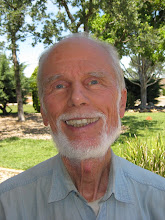
Free at last! Thank God! I'm free at last! Yesterday I got my editor's acknowledgement of receipt of my revised 2226-word ms for Touchstone's forum on Harry Potter to be published in November, the month the next Harry Potter movie comes out. As I understand the forum, my con article will be submitted to a couple of critics for their responses to it.
Over the past 8 years that I have been studying and writing about my bete noire, Harry, I have compiled a massive basis of observations for my criticism, including my notebook with detailed notes on my reading of each of the seven volumes of the series. And I have written thousands of words of detailed commentary. For all of that, I have published only four articles on Rowling's work, three in The American Spectator Online (July ?, 2005; Aug. 15, 17, 2007) and Celebrate Life (Nov/Dec 2007). The mainstream Christian journals have taken the Christianity Today line that these books are a "book of virtues." And even First Things and Touchstone have published favorable reviews on the little wizard.
I have distilled my 5000-word 2007 ms to meet an editorial requirement of about 2000 words. So, instead of my natural approach of building detail on detail, I have cut the details to fit and made my strongest argument on the basis of the contrast between Rowling's Post-Christian imagination and relativist morality and the profoundly Christian vision and transcendent (absolute) morality of Tolkein and Lewis. I think that the necessity of brevity will prove a virtue in this essay.
The lynchpin of my essay, then, is the following words of Aragorn to Eomer in the fields of Rohan when Eomer disputed his passage with Legolas and Gimli on their mission to rescue Pippin and Merry:
"Good and ill have not changed since yesteryear; nor are they one thing among Elves and Dwarves and another among Men. It is a man's part to discern them, as much in the Golden Wood as in his own house" (The Two Towers, Ballentine pb, 1965, 50, cited by Gene Edward Veith, “Still Ringing True,” World Magazine, 2001).
Do pray for Joanne Rowling and her many readers, that God may grant them his grace.
Thursday, July 10, 2008


Thursday, May 29, 2008
Prince Caspian Lite
Before the Pevensie children are jerked out of the London train station by Prince Caspian’s blowing Susan's magic horn, Susan has already been deftly characterized as a loner liar and Peter, rather crudely, as a short-tempered brawler. These flaws seem to be the direct result of their tenures as Queen and as High King in Narnia. An inauspicious beginning for Director Andrew Adamson’s essay at translating C. S. Lewis’s Prince Caspian into a commercially successful movie, but these character defects help explain why Susan and Peter fail to see Aslan when innocent little Lucy does.
"Prince Caspian" the movie actually begins in media res with a scene not seen but implied in the book: the wife of King Miraz giving birth to a son. But Miraz is usurper of the Telmarine throne of Narnia and murderer of the former King Caspian, who was his own brother and Prince Caspian’s father. Thus, the birth of Miraz’s son as heir to the throne is a death sentence for the youthful Prince Caspian, Miraz’s nephew and rightful heir to the throne. Prince Caspian’s consequent flight results in his meeting the Old Narnians who adopt him as their champion against Miraz.
The quick transition from baby delivery to chase scene as Miraz’s horsemen pursue Caspian works well, cinematically, for a movie full of such chases, two big battle scenes (one newly conceived for the movie), and the single combat of High King Peter and King Miraz. Not for nothing is this children’s story rated PG 13. NPR’s movie reviewer noted a bit sourly that the battle scenes take up the better part of the 2-1/2 hour film. All this fast-paced combat action along with their special effects certainly enhanced the movie’s $56-million first-weekend box office, but the time lavished on them didn’t do much to advance the moral vision of C. S. Lewis’s original.
Nevertheless, the theme of belief vs unbelief is retained as the children and their dwarf companion make the ill-advised decision not to follow Aslan when Lucy sees him and understands his invitation to follow him on their quest to bring aid to Prince Caspian at Aslan’s How (“a low hill”). Later on Aslan tells Lucy that she should have followed him even if the others would not. And the question of why they had not seen Aslan troubles Peter and Susan as revealed in their dialogue with Lucy.
Arrived at Aslan's How, High King Peter prematurely concludes that Aslan has left the execution of the rescue of Narnia up to the kings and queens and their Old Narnian supporters. When his rash plan to make a sortie into the relatively lightly guarded castle of King Miraz ends in a costly rout, he and Caspian blame each other and even get into sword play.
So why are Lewis’s largely exemplary heroes characterized as and behave like such jerks? Simple: The decadence of popular culture in the West is such that had these two teenagers acted as responsibly as their originals, they would have been “like totally unbelievable" to the target audience of movie goers, teenagers and up. Good little girls like Lucy may be tolerated, but virtuous teenagers are oxymoronic.
Even worse, in a misguided effort to dazzle us with special effects and toy with vengeance, the film sensationalizes the Black Dwarf Nikabrik’s introduction of the Hag and the Werewolf and their proposal to revive the White Witch—by reviving her. Thus, she actually appears with a demonstration of her ice-producing power in Aslan’s How, a fortress shrine to Aslan complete with the remains of the broken stone table on which Aslan had been sacrificed for Edmund. This desecration of the fane of Aslan is offensive enough, but her witchcraft is so powerful that she easily mesmerizes both Peter and Prince Caspian who feebly protests, “This is not what I wanted.” Edmund, a teenager but apparently still young enough to retain some virtue, bursts in just in time to save the day.
The revised message of this scene seems to be that the power of witchcraft is so great that it can neutralize if not control the will of the two main heroes. But this flatly contradicts what Lewis was demonstrating. Instead, in the book we see that even at this, the lowest point of his military fortunes, Caspian had quite enough chest to reject with indignation the madness of using witchcraft to substitute the evil Witch for the evil Miraz: “So that’s your plan Nikabrik! Black sorcery and the calling up of an accursed ghost.” His imagination fed by the chivalrous tales of Old Narnia, the real Prince Caspian of Lewis’s book was impervious to such a proposal. But in this scene, the movie Prince Caspian comes across as a slightly doltish Telmarine (complete with a non-descript East European accent) who lacks the virtue to resist the power of the White Witch’s mere ghost.
Thus, Disney subverts one of the central themes of Lewis’s book: An adult mentor's loving nurture of the moral imagination of children through teaching them to love the right stories creates men and women of moral conviction who will act in accord with the virtues they have imbibed from those stories. This subversion is a profound betrayal of Lewis’s vision because the conversion of Telmarine Prince Caspian first to solidarity with his hereditary foes, the Old Narnians, and finally to faith in Aslan parallels Lewis’s own conversion first of his imagination by George MacDonald’s classic fairy story, Phantastes, before his later conversion to faith in Christ. Indeed, I am not alone in believing that Lewis put something of himself in Prince Caspian.
Furthermore, The Chronicles in general and Prince Caspian in particular are Lewis’s artistic response to the poverty of imagination, the inhumanity of the dominant naturalism of the Europe of his as of our day. In The Abolition of Man, Lewis discursively skewered this philosophy (quintessentially Ayers’s Logical Positivism) and its academic camp followers such as the authors of the infamous “Green Book.” But through his fantasy, Lewis gives us a story to capture the imagination of children and so help parents to actually give us men like Caspian, men with chests.
If ever the culture of the West comes to its senses and recovers its Christian roots, this seriously flawed if entertaining attempt to translate Prince Caspian into film must be redone, retaining and emphasizing both of Lewis’s two great themes: 1) The vital role of the right kind of children’s stories in the moral formation of men with chests and 2) The long walk of faith that demands hard steps of obedience to the King.
"Prince Caspian" the movie actually begins in media res with a scene not seen but implied in the book: the wife of King Miraz giving birth to a son. But Miraz is usurper of the Telmarine throne of Narnia and murderer of the former King Caspian, who was his own brother and Prince Caspian’s father. Thus, the birth of Miraz’s son as heir to the throne is a death sentence for the youthful Prince Caspian, Miraz’s nephew and rightful heir to the throne. Prince Caspian’s consequent flight results in his meeting the Old Narnians who adopt him as their champion against Miraz.
The quick transition from baby delivery to chase scene as Miraz’s horsemen pursue Caspian works well, cinematically, for a movie full of such chases, two big battle scenes (one newly conceived for the movie), and the single combat of High King Peter and King Miraz. Not for nothing is this children’s story rated PG 13. NPR’s movie reviewer noted a bit sourly that the battle scenes take up the better part of the 2-1/2 hour film. All this fast-paced combat action along with their special effects certainly enhanced the movie’s $56-million first-weekend box office, but the time lavished on them didn’t do much to advance the moral vision of C. S. Lewis’s original.
Nevertheless, the theme of belief vs unbelief is retained as the children and their dwarf companion make the ill-advised decision not to follow Aslan when Lucy sees him and understands his invitation to follow him on their quest to bring aid to Prince Caspian at Aslan’s How (“a low hill”). Later on Aslan tells Lucy that she should have followed him even if the others would not. And the question of why they had not seen Aslan troubles Peter and Susan as revealed in their dialogue with Lucy.
Arrived at Aslan's How, High King Peter prematurely concludes that Aslan has left the execution of the rescue of Narnia up to the kings and queens and their Old Narnian supporters. When his rash plan to make a sortie into the relatively lightly guarded castle of King Miraz ends in a costly rout, he and Caspian blame each other and even get into sword play.
So why are Lewis’s largely exemplary heroes characterized as and behave like such jerks? Simple: The decadence of popular culture in the West is such that had these two teenagers acted as responsibly as their originals, they would have been “like totally unbelievable" to the target audience of movie goers, teenagers and up. Good little girls like Lucy may be tolerated, but virtuous teenagers are oxymoronic.
Even worse, in a misguided effort to dazzle us with special effects and toy with vengeance, the film sensationalizes the Black Dwarf Nikabrik’s introduction of the Hag and the Werewolf and their proposal to revive the White Witch—by reviving her. Thus, she actually appears with a demonstration of her ice-producing power in Aslan’s How, a fortress shrine to Aslan complete with the remains of the broken stone table on which Aslan had been sacrificed for Edmund. This desecration of the fane of Aslan is offensive enough, but her witchcraft is so powerful that she easily mesmerizes both Peter and Prince Caspian who feebly protests, “This is not what I wanted.” Edmund, a teenager but apparently still young enough to retain some virtue, bursts in just in time to save the day.
The revised message of this scene seems to be that the power of witchcraft is so great that it can neutralize if not control the will of the two main heroes. But this flatly contradicts what Lewis was demonstrating. Instead, in the book we see that even at this, the lowest point of his military fortunes, Caspian had quite enough chest to reject with indignation the madness of using witchcraft to substitute the evil Witch for the evil Miraz: “So that’s your plan Nikabrik! Black sorcery and the calling up of an accursed ghost.” His imagination fed by the chivalrous tales of Old Narnia, the real Prince Caspian of Lewis’s book was impervious to such a proposal. But in this scene, the movie Prince Caspian comes across as a slightly doltish Telmarine (complete with a non-descript East European accent) who lacks the virtue to resist the power of the White Witch’s mere ghost.
Thus, Disney subverts one of the central themes of Lewis’s book: An adult mentor's loving nurture of the moral imagination of children through teaching them to love the right stories creates men and women of moral conviction who will act in accord with the virtues they have imbibed from those stories. This subversion is a profound betrayal of Lewis’s vision because the conversion of Telmarine Prince Caspian first to solidarity with his hereditary foes, the Old Narnians, and finally to faith in Aslan parallels Lewis’s own conversion first of his imagination by George MacDonald’s classic fairy story, Phantastes, before his later conversion to faith in Christ. Indeed, I am not alone in believing that Lewis put something of himself in Prince Caspian.
Furthermore, The Chronicles in general and Prince Caspian in particular are Lewis’s artistic response to the poverty of imagination, the inhumanity of the dominant naturalism of the Europe of his as of our day. In The Abolition of Man, Lewis discursively skewered this philosophy (quintessentially Ayers’s Logical Positivism) and its academic camp followers such as the authors of the infamous “Green Book.” But through his fantasy, Lewis gives us a story to capture the imagination of children and so help parents to actually give us men like Caspian, men with chests.
If ever the culture of the West comes to its senses and recovers its Christian roots, this seriously flawed if entertaining attempt to translate Prince Caspian into film must be redone, retaining and emphasizing both of Lewis’s two great themes: 1) The vital role of the right kind of children’s stories in the moral formation of men with chests and 2) The long walk of faith that demands hard steps of obedience to the King.
Wednesday, May 21, 2008
Friday, May 9, 2008
Evangelical Manifesto, Part 1 / Memento Mori: Three Extractions
First the memento mori: I'll complete the Biblical three score and ten next month, and today my dentist pulled three molars from the right side of my mouth. Two had gold crowns and the third a large mercury amalgam filling that had cracked and broken. Perhaps because I also have "moderate periodontal disease," they came out relatively easily and I only had to pay $115 each instead of the $185 listed for "surgical extraction." Because many of my gold crowns have been undermined by decay, my mid-term prospect is to extract all of them and get an upper plate. (The bottom plates tend to work poorly because the lower jaw is too flexible.)
My long-term prospect is, of course, the same as yours, death. But "since we have been justified by faith, we have peace with God through our Lord Jesus Christ," and I "rejoice in the hope of the glory of God. . . . Since we have now been justified by his blood, how much more shall we be saved from God's wrath through him!" (Romans 5:1, 2b, 9). I simply take Jesus at his word when he said, "I tell you the truth, whoever hears my word and believes him who sent me has eternal life and will not be condemned; he has crossed over from death to life" (John 5:24)
Second, Evangelical Manifesto: The steering committe includes the likes of Timothy George, Os Guinness, Rich Mouw (President, Fuller Theological Seminary), David Neff (Editor in Chief, Christianity Today Media Group), and Dallas Willard (Professor of Philosophy, University of Southern California). Charter signers include Leighton Ford, Irwin Lutzer, Jack Hayford on the one hand and Ron Sider and Jim Wallis on the other. Notable by their absence are leaders heavily involved in the culture war such as Jim Dobson and Tony Perkins of Family Research Council.
The Manifesto bills itself as "A Declaration of Evangelical Identity and Public Commitment." The infelicitous statement of the rationale for this declaration of "who we are and where we stand" seems to be saying that living together in societies riven by deep differences about religion and ideology is "one of the greatest challenges of the global era." Lack of clarity in the writing here gets the Manifesto off to a rocky start, but pluralism is certainly a problem, perhaps in ways more serious for Christian faith than they seem to think.
The Manifesto does maintain most of the theological distinctives of Evangelical faith--except for God's judgment and wrath and the Last Things, Heaven and Hell. Since these severely challenged biblical doctrines are so important for effective evangelism, this is a serious defect. Nevertheless, these worthies do maintain first of all that "Jesus Christ is fully God become fully human. . . beside whom there is no other god, and beside whom there is no other name by which we must be saved" (p. 6). This exclusive claim of Christian faith is perhaps where the spiritual battle rages most fiercely today so that point is well taken. More later.
You can find it at http://www.anevangelicalmanifesto.com/
My long-term prospect is, of course, the same as yours, death. But "since we have been justified by faith, we have peace with God through our Lord Jesus Christ," and I "rejoice in the hope of the glory of God. . . . Since we have now been justified by his blood, how much more shall we be saved from God's wrath through him!" (Romans 5:1, 2b, 9). I simply take Jesus at his word when he said, "I tell you the truth, whoever hears my word and believes him who sent me has eternal life and will not be condemned; he has crossed over from death to life" (John 5:24)
Second, Evangelical Manifesto: The steering committe includes the likes of Timothy George, Os Guinness, Rich Mouw (President, Fuller Theological Seminary), David Neff (Editor in Chief, Christianity Today Media Group), and Dallas Willard (Professor of Philosophy, University of Southern California). Charter signers include Leighton Ford, Irwin Lutzer, Jack Hayford on the one hand and Ron Sider and Jim Wallis on the other. Notable by their absence are leaders heavily involved in the culture war such as Jim Dobson and Tony Perkins of Family Research Council.
The Manifesto bills itself as "A Declaration of Evangelical Identity and Public Commitment." The infelicitous statement of the rationale for this declaration of "who we are and where we stand" seems to be saying that living together in societies riven by deep differences about religion and ideology is "one of the greatest challenges of the global era." Lack of clarity in the writing here gets the Manifesto off to a rocky start, but pluralism is certainly a problem, perhaps in ways more serious for Christian faith than they seem to think.
The Manifesto does maintain most of the theological distinctives of Evangelical faith--except for God's judgment and wrath and the Last Things, Heaven and Hell. Since these severely challenged biblical doctrines are so important for effective evangelism, this is a serious defect. Nevertheless, these worthies do maintain first of all that "Jesus Christ is fully God become fully human. . . beside whom there is no other god, and beside whom there is no other name by which we must be saved" (p. 6). This exclusive claim of Christian faith is perhaps where the spiritual battle rages most fiercely today so that point is well taken. More later.
You can find it at http://www.anevangelicalmanifesto.com/
Saturday, April 19, 2008
California's Marriage Protection Act is Good Public Policy
Fifteen-year-old Joshua Roberts "pleaded guilty to assault with a deadly weapon" causing great bodily injury during an unprovoked assault on Levi Snyder outside a local movie theater according to Redding's Record Searchlight for April 17. Snyder was rendered comatose as a result of the attack.
And this story is yet another reason for all California citizens of good will to support the California Marriage Protection Act. This California initiative constitutional amendment would put into the California Constitution California's current marriage statute: "Only marriage between a man and a woman is valid or recognized in California." This step has become necessary because these 14 words have been challenged in the California courts by homosexual activists and the California Supreme Court is set to decide the fate of man-woman marriage during the current session.
We males being barbarians by nature, civilizing each new generation of boys and young men is the basic task of society and fathers are crucial to this task. So when I saw Joshua Roberts's photo in the newspaper I thought, "Dollars to doughnuts he doesn't live with his father." And a local resident who claimed to know the boy confirmed my assumption. Whether this is true of Roberts or not, I believe it is true that the best single predictor for a boy's dropping out of school, getting into drugs or getting into trouble with the law is his not living in a household with his natural father.
And marriage is the social institution that helps men to remain with their children. But in countries such as Sweden and Denmark where same-sex marriages are legal, marriage is said to have tanked. That is, neither gays nor straights are bothering to get married. Thus, same-sex marriage seems to subvert traditional marriage by dishonoring it in the eyes of many people. In the United States where the majority of the population still believes that homosexual acts are sinful, the negative effect on marriage rates could be even more pronounced than in Scandanavia.
So your personal safety as you lock up your bike at the local Movies 10 depends on marriage and the support it affords teenagers and young men by helping keep dad in their homes. This argument has helped hesitant petition signers get up the nerve to do what they ought to do and sign the Marriage Protection Act petition. It works kind of like Garrison Keillor's Powder Milk Biscuits.
And this story is yet another reason for all California citizens of good will to support the California Marriage Protection Act. This California initiative constitutional amendment would put into the California Constitution California's current marriage statute: "Only marriage between a man and a woman is valid or recognized in California." This step has become necessary because these 14 words have been challenged in the California courts by homosexual activists and the California Supreme Court is set to decide the fate of man-woman marriage during the current session.
We males being barbarians by nature, civilizing each new generation of boys and young men is the basic task of society and fathers are crucial to this task. So when I saw Joshua Roberts's photo in the newspaper I thought, "Dollars to doughnuts he doesn't live with his father." And a local resident who claimed to know the boy confirmed my assumption. Whether this is true of Roberts or not, I believe it is true that the best single predictor for a boy's dropping out of school, getting into drugs or getting into trouble with the law is his not living in a household with his natural father.
And marriage is the social institution that helps men to remain with their children. But in countries such as Sweden and Denmark where same-sex marriages are legal, marriage is said to have tanked. That is, neither gays nor straights are bothering to get married. Thus, same-sex marriage seems to subvert traditional marriage by dishonoring it in the eyes of many people. In the United States where the majority of the population still believes that homosexual acts are sinful, the negative effect on marriage rates could be even more pronounced than in Scandanavia.
So your personal safety as you lock up your bike at the local Movies 10 depends on marriage and the support it affords teenagers and young men by helping keep dad in their homes. This argument has helped hesitant petition signers get up the nerve to do what they ought to do and sign the Marriage Protection Act petition. It works kind of like Garrison Keillor's Powder Milk Biscuits.
Thursday, April 17, 2008
McCain Affirms Prolife as the Republican Position
Family Research Council published today the following interview segment:
At a student forum moderated by MSNBC's Chris Matthews, the Republican nominee reiterated the importance of the party's pro-life platform:
Matthews: ...Would you put a person on the ticket with you, like the former governor of this state who is very popular, Tom Ridge, even though he may disagree on the issue of Roe v. Wade and abortion rights?... McCain: I don't know if it would stop him, but it would be difficult... Matthews: Why that one issue? Why is that one litmus test issue? McCain: I'm not saying that it would be necessarily, but I am saying... the respect and cherishing of the right of the unborn is one of the fundamental principles of my party. And it's a... deeply held belief of mine.
'Nuff said, David
At a student forum moderated by MSNBC's Chris Matthews, the Republican nominee reiterated the importance of the party's pro-life platform:
Matthews: ...Would you put a person on the ticket with you, like the former governor of this state who is very popular, Tom Ridge, even though he may disagree on the issue of Roe v. Wade and abortion rights?... McCain: I don't know if it would stop him, but it would be difficult... Matthews: Why that one issue? Why is that one litmus test issue? McCain: I'm not saying that it would be necessarily, but I am saying... the respect and cherishing of the right of the unborn is one of the fundamental principles of my party. And it's a... deeply held belief of mine.
'Nuff said, David
Sunday, April 6, 2008
Long Time No See
I've been working day and night (an exaggeration, of course) what with my circulation of California Initiative Petitions and gathering the firewood from the California Department of Forestry's thinning of the brush and trees of the undeveloped chaparral just east of my house in the approach zone for the nearby light aircraft field on the west side of Redding.
First, I'd like to mention a couple of positives for John McCain's candidacy for President. He was not on my long or short list of candidates, but then there were problems for me with the entire pack. But McCain is a candidate who has taken a bold and clear stand against torture as an instrument in the war against the Islamofascists. He stated the obvious reality that controlled drowning, euphemistically called "water boarding," is torture, something that the U. S. Attorney General has not been able to bring himself to do, probably because of legal implications of the CIA's having used it.
In addition, I expect that McCain will try to find some reasonable and humane solution to the problem of America's eagerly using and sometimes exploiting Mexican immigrant labor in agriculture, industry and domestic service while not giving them any legal status. From a Biblical perspective, we must treat with care these aliens that we have invited by our willingness to pay them for their labor lest we violate the principle set forth in Yahweh's command to Israel about the aliens among them. He said, "Do not mistreat an alien or oppress him, for you were aliens in Egypt" (Ex. 22:21, cf. Ex. 23:9; Lev. 24:22; Deut. 24:17). And Deuteronomy 27:19 pronounces a curse on anyone who withholds justice from the alien.
On the other hand, McCain, at a minimum, must accommodate us prolifers by maintaining the Bush Administration's ban on federal funding for embryonic stem-cell research. This move is essential to the success of his candidacy and can hardly hurt him given the recent scientific breakthroughs that have made pluripotent stem cells available by ethical means.
To ensure that I have offended someone, I'll conclude with a comment I posted elsewhere:
Reverend Wright was right when he said that the United States got what it was asking for on 9/11, that is, if he meant a small taste of God's judgment for our national sins such as our putting money before God and legally aborting 50,000,000 of our offspring, black, white, brown and red.
First, I'd like to mention a couple of positives for John McCain's candidacy for President. He was not on my long or short list of candidates, but then there were problems for me with the entire pack. But McCain is a candidate who has taken a bold and clear stand against torture as an instrument in the war against the Islamofascists. He stated the obvious reality that controlled drowning, euphemistically called "water boarding," is torture, something that the U. S. Attorney General has not been able to bring himself to do, probably because of legal implications of the CIA's having used it.
In addition, I expect that McCain will try to find some reasonable and humane solution to the problem of America's eagerly using and sometimes exploiting Mexican immigrant labor in agriculture, industry and domestic service while not giving them any legal status. From a Biblical perspective, we must treat with care these aliens that we have invited by our willingness to pay them for their labor lest we violate the principle set forth in Yahweh's command to Israel about the aliens among them. He said, "Do not mistreat an alien or oppress him, for you were aliens in Egypt" (Ex. 22:21, cf. Ex. 23:9; Lev. 24:22; Deut. 24:17). And Deuteronomy 27:19 pronounces a curse on anyone who withholds justice from the alien.
On the other hand, McCain, at a minimum, must accommodate us prolifers by maintaining the Bush Administration's ban on federal funding for embryonic stem-cell research. This move is essential to the success of his candidacy and can hardly hurt him given the recent scientific breakthroughs that have made pluripotent stem cells available by ethical means.
To ensure that I have offended someone, I'll conclude with a comment I posted elsewhere:
Reverend Wright was right when he said that the United States got what it was asking for on 9/11, that is, if he meant a small taste of God's judgment for our national sins such as our putting money before God and legally aborting 50,000,000 of our offspring, black, white, brown and red.
Subscribe to:
Comments (Atom)